
Sun-Drunk: On the literature of overheated minds
There is a particular kind of alchemy that occurs somewhere around the third week of July, when the light stretches thin and gold across the evening, and the ordinary restrictions of life seem, however briefly, negotiable. Summer performs a civic amnesty, caution is thrown to the wind, days dissolve into a pleasant daze, and the long, leisurely hours induce a lethargy that borders on tranquillity. There is frolicking coupled with the loosening of the collar and the conscience alike, permitting inhibitions to loosen in the warm glow of a late evening. And yet this same heat, pressed too close, without release, turns into something else entirely, a claustrophobic oppressiveness, like that of a lid screwed on tight over something combustible. Heat, in other words, is never merely weather. It is mood with memory, and literature has long understood that its temperature is never neutral; it liberates, and it imprisons in the same line.

Ray Bradbury grasped this duality with a title that does double duty as a scientific footnote and a moral incitement. Fahrenheit 451 names the point at which paper ignites and then spends its pages interrogating what that combustion actually accomplishes. The state's fire is sterile and administrative, a heat without warmth, deployed to cauterise memory and incinerate the inconvenient permanence of the written word. But Bradbury refuses to let fire remain merely punitive. Once Montag flees the city, heat is reclaimed; the campfire of the book-people offers not erasure but continuity, a communal glow around which civilisation might be re-lit rather than burned down. It is worth noting, too, how faithfully this ambivalence has travelled beyond the page, a French edition rendered its most censored passages legible only when warmed by a lighter's flame, so that the reader must, quite literally, generate the heat required to recover what was suppressed.
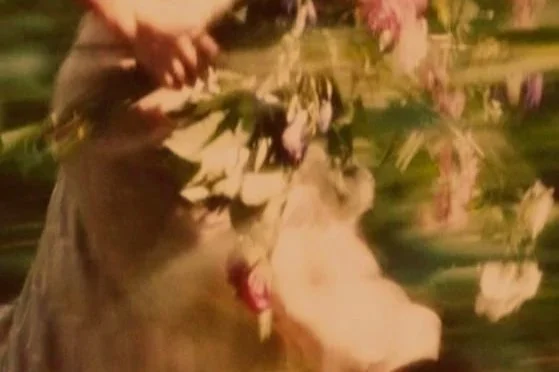
Shakespeare locates heat somewhere less ideological and more instinctive. In ‘A Midsummer Night's Dream’, heat is the solvent that dissolves the season's oaths and rational commitments alike; Helena's complaint against Demetrius casts his broken vows as something that simply melted, hail turned to rain, the moment proximity to Hermia warmed him past the point of good sense. The title itself performs a sleight of hand; midsummer, historically portrayed with sun-drunk excess and seasonal delirium, licenses the very irrationality the plot depends upon. The lovers flee Athens's cold legal architecture for a forest that runs warm, humid, and permissive, and it is precisely this heaviness in the air that renders them pliable to Puck's meddling. Even the fairy court is not exempt; Oberon and Titania's quarrel is figured as a climatic disturbance, their private discord souring the seasons themselves, proof that in this play emotional and atmospheric temperature are simply the same instrument tuned to different registers.
Tennessee Williams strips away whimsical and leaves something closer to a fever. In ‘A Streetcar Named Desire’, the sodden, un-air-conditioned heat of the French Quarter is less a backdrop than an antagonist, an oppressive climate that acts as a kind of psychological diluent to propriety. It is heat that licenses Stanley's animal directness, and heat, cruelly, that accelerates Blanche's fragmentation; the poker-night scene makes explicit what the play insists throughout, that rising temperature and rising desire are the same curve. What distinguishes Williams's treatment from Shakespeare's is its lack of a comic escape hatch; there is no dawn here to reset the enchantment. The heat simply builds until a marriage, and a mind, give way beneath it.

If literature narrates heat's dual nature in sequence, painting can hold both temperatures at once, and no work does this more persuasively than John Monks’s Heat, from 2018. Monks, who paints from within the decayed, history-thick interiors he inhabits, resists the hard edge entirely; his canvases are built from a blur of gestural, swirling oil, an atmosphere rather than a scene. There are no harsh lines here, only a soft, smouldering confusion, days folding into one another, the eye given no fixed point to rest upon, only an aura, a shimmer, something closer to a mood remembered than a room observed. It is heat rendered not as an event but as duration, the long, formless middle of a summer that refuses to resolve into clarity, which is, perhaps, the truest portrait of the season itself, not an image, but a temperature you can almost feel rising off the canvas.
By Abigail Marchetti